
A talented and experienced workforce that is motivated to grow the organization can have a positive impact on customer satisfaction and the bottomline. That is why it is important for businesses to create an effective talent management strategy. Engaged employees are more productive and contribute to a more positive workplace culture.
What is Talent Management
Talent management is a key process in HR that focuses on effectively acquiring qualified talent, fostering professional development and ensuring these talents a retained in the organization. It encompasses a broad range of HR processes that is designed to attract the right talent and ensure that they grow and succeed within the organization.
Building a Talent Management Strategy
An effective talent management strategy ensures that your workforce are engaged with and helps your talent feel satisfied and empowered in your organization.
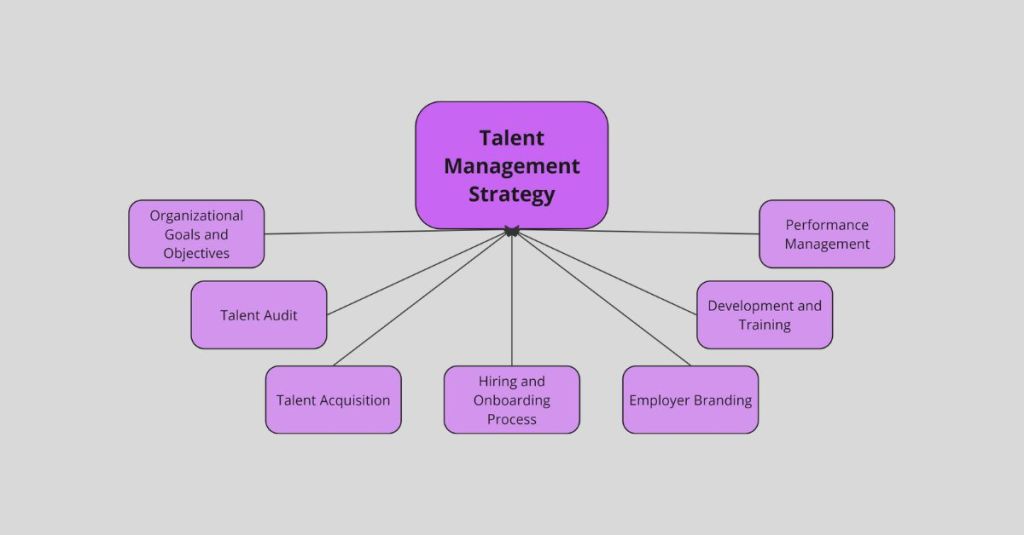
- Understand Your Organization’s Long-Term and Short-Term Goals: Determine the goals and objectives of your organization, this ensures that your talent management strategy supports your organizations targets and goals. Here are a number of examples on how you can align your talent management strategy:
- If your organization has a positive growth trajectory with new clients, then the emphasis of your talent management strategy should be acquisition.
- If your organization is pivoting to a new technology or implementing digital solutions like a new CRM, then emphasis should be training and development.
- In case of a higher than average turn-over rate, then your strategy may focus on employee retention.
- Conducting a Talent Audit: A talent audit evaluates the workforce’s current state, this includes skills, expertise, capabilities, performance and effectiveness. The audit helps organizations understand the strength, weaknesses, gaps and opportunities within the current talent pool.
- Skills Assessment: The audit assesses the skills and competencies within the organization and provides insights on how the talent pool is aligned with potential shifts and trends in the industry. This is crucial to assess workforce readiness, especially for organization that are implementing new technology like digital transformation or AI.
- Performance Review: This provides quantitative data on the performance of the workforce and helps identify gaps and opportunities for training and improvement.
- Insights on Retention: Provides insights on the retention and attrition rates within the organization. Shifts in retention rates can indicate changes in the job market or can be indicative of problems within the organization.
- Develop Talent Acquisition Strategies: Attracting the right talent is the foundation of an effective talent management strategies. This can ensure that the organization can identify, attract, and hire individuals who possess the skills, experience, and culture fit necessary to drive the organization’s growth and success.
- Talent Pipelines: Proactive sourcing continuously identify and engage with potential candidates that allows the organization to quickly scale.
- Streamlined Process: The hiring and on-boarding process is provides a lasting impression to candidates and your employee.
- Assessment Tools: Incorporating assessment tools can help evaluate candidates and streamline the selection process.
- Employer Branding: Establishing and improving employer branding
- Hiring and Onboarding Process: As mentioned in the previous point, the hiring and onboarding process is the first touchpoint that a employee experiences interacting with the organization and can leave a long-lasting impact on their perception of the business.
- Employer Branding: A strong employer brand communicates to candidates and potential employees the company’s mission, vision, goals, values and culture. An employer brand can help attract top talent, reduce employee turn over rate.
- Talent Development and Training: Implementing a talent development and training program ensures continuous improvement on the workforce’s skills and competencies.
- Implement Performance Management Systems: A performance management system helps identify key performance indicators (KPIs) and assess individual performance relative to scorecards or organizational goals and targets. Performance management systems also help assess employees who are qualified for career advancement and pay increase.
Advantages of Implementing Talent Management in your Organization
Implementing an effective talent management strategy allows your organization to grow and nurture your workforce and contribute to long-term success.
| Advantages | Description |
| Employee Performance and Productivity | Establishing Key Performance Indicators (KPIs) and setting targets helps employee understand how they contribute and help the organization grow. |
| Reaching and Attracting Talent | A well rounded talent management strategy allows organizations to reach and attract the right talent through a strong employer branding and establishing recruitment pipelines and talents pools. |
| Employee Engagement | Providing opportunities for employees to learn, grow and upskill motivates them to engage with your organization. |
| Reduced Turnover | A talent management strategy can help manage employee turn-over through implementation of processes like employee feedback and employee recognition. |
Implementing a comprehensive talent management strategy helps reduce employee turnover by creating a positive work environment, offering opportunities for growth and development, providing competitive compensation and benefits, and fostering a culture of recognition and support. By addressing these areas, organizations can significantly improve employee satisfaction and loyalty, leading to reduced turnover and a more stable and motivated workforce.



 Global ZenTech