
Human Resource Management (HRM) represents a strategic approach to effectively and efficiently managing an organization’s most valuable asset—its people. In today’s competitive business landscape, HRM has evolved from basic administrative functions to a comprehensive system that drives organizational success, employee engagement, and sustainable growth.
What is HR Management
HR management is the strategic and coherent approach to the effective and efficient management of people in a company or organization such that they help their business gain a competitive advantage. It encompasses the management of employees from recruitment through retirement, focusing on maximizing employee performance while ensuring alignment with organizational goals.
At its core, HRM involves the practice of recruiting, hiring, deploying and managing an organization’s employees. Modern HRM emphasizes employees as valuable assets of the business, often referred to as human capital, with the goal of making effective use of employees while reducing risk and maximizing return on investment.
The Seven Key Facets of HR Management
HR Management encompasses multiple interconnected facets that work to together to create a comprehensive people strategy:
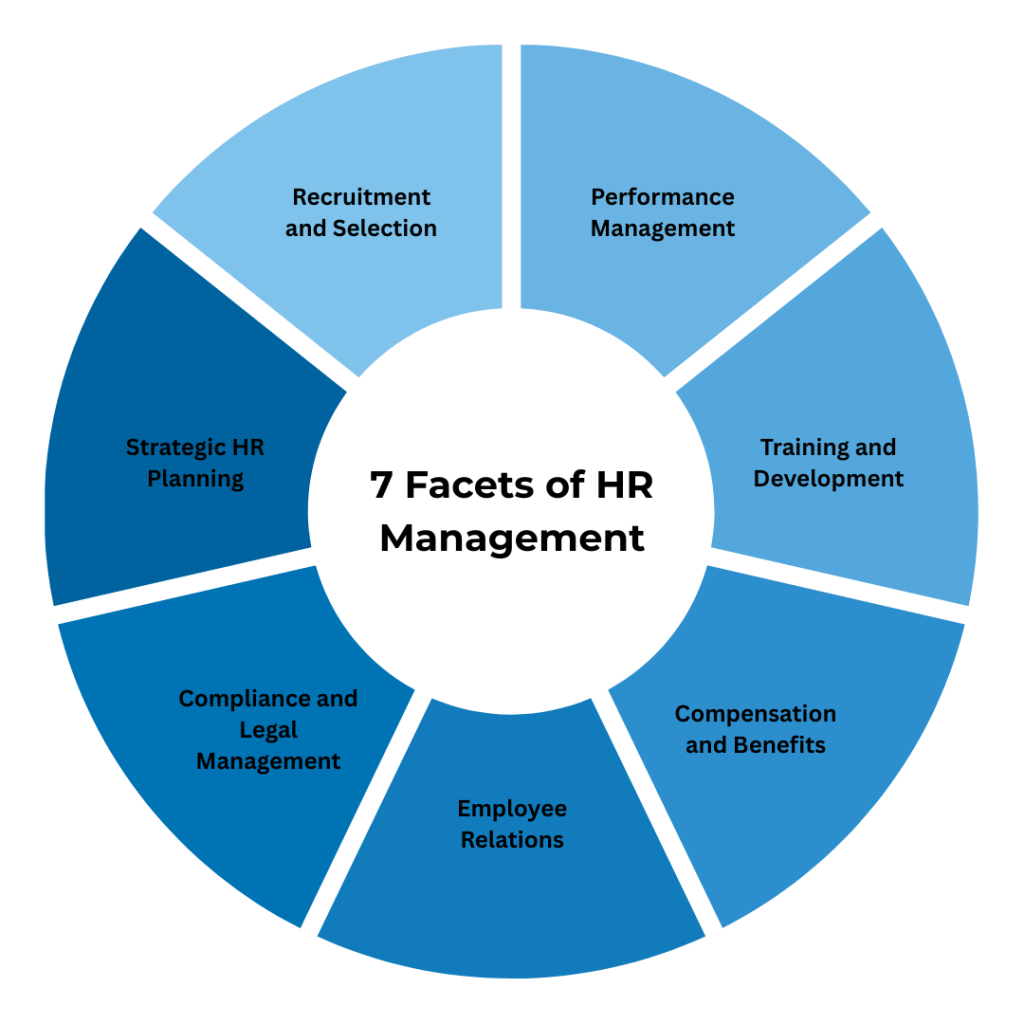
1. Recruitment and Selection: Finding and hiring the right talent is fundamental to organizational success. This involves job analysis, creating compelling job descriptions, sourcing candidates through various channels, screening applications, conducting interviews and making hiring decisions. Effective recruitment helps build a strong employer brand and attracts top talent.
2. Performance Management: This facet includes goal setting, performance evaluations, a feedback mechanism, and coaching to help employees achieve their potential. Performance management systems track employee progress, identify areas for improvement, and align individual objectives with organizational goals through regular reviews and constructive feedback.
3. Training and Development: Continuous learning and skill enhancement are vital for both employee satisfaction and business competitiveness. This includes onboarding new hires, providing job-specific training, professional development programs, leadership development, and cross-training opportunities to build organizational capability.
4. Compensation and Benefits: Managing employee compensation structures, benefits packages, and total reward systems to attract and retain talent. This includes salary administration, health insurance, paid time off, and performance-based incentives that align with market standards and organizational budget.
5. Employee Relations and Communication: Fostering positive relationships between employees and management while maintaining clear communication channels. This involves conflict resolution, maintaining workplace culture, addressing employee concerns, and ensuring effective two-way communication throughout the organization.
6. Compliance and Legal Management: Ensuring adherence to employment laws, workplace safety regulations, and industry-specific compliance requirements. This critical facet includes maintaining proper documentation, implementing safety protocols, managing legal risks, and staying current with changing regulations.
7. Strategic HR Planning and Analytics: Using data-driven insights to forecast future talent needs, succession planning, and aligning HR strategies with business objectives. This involves workforce planning, analyzing HR metrics, and developing strategic initiatives that support long-term organizational growth.
Key HR Management Functions
The primary functions of HR management work together to create an integrated approach to people management
- Talent Acquisition: Comprehensive recruitment processes that identify and attract qualified candidates
- Onboarding and Orientation: Systematic introduction of new employees to organizational culture and processes
- Performance Evaluation: Regular assessment and feedback systems to optimize employee productivity
- Learning and Development: Continuous skill building and career advancement opportunities
- Compensation Management: Initiatives to maintain high levels of employee satisfaction and retention
- Compliance Management: Ensuring all HR practices meet legal and regulatory requirements
- Workforce Planning: Strategic planning for future talent needs and organizational growth.
HR Challenges for Small and Medium Enterprises
Small and medium enterprises (SMEs) face unique HR challenges that can significantly impact their growth and sustainability:
- Limited Resources and Budget Constraints: SMEs often operate with constrained budgets, making it difficult to invest in comprehensive HR systems or dedicated personnel. This leads to HR responsibilities falling on overstretched individuals who must juggle multiple roles, resulting in potential burnout and inconsistent HR practices.
- Talent Acquisition and Retention Difficulties: Small businesses struggle to compete with larger organizations that offer attractive salary packages, comprehensive benefits, and established careers paths. SMEs often lack brand recognition, making it challenging to attract top talent, while limited growth opportunities can lead to higher turnover rates.
- Compliance and Legal Challenges: Keeping up with complex and ever-changing employment laws is particularly difficult for SMEs with limited HR expertise. Non-compliance can result in costly fines, legal issues, and damage to company reputation, while the complexity of regulations across different jurisdictions adds additional burden.
- Limited Training and Development Resources: SMEs often cannot afford extensive training programs, leading to skill gaps and reduced competitiveness. Employees may feel undervalued due to lack of professional development opportunities, which can negatively impact retention and job satisfaction.
- Performance Management Inefficiencies: Many SMEs lack formal performance management systems, relying instead on informal methods that can lead to inconsistent results. Without proper tools or training, managers often struggle to provide effective feedback and coaching, impacting overall productivity.
- Technology and Process Limitations: SMEs frequently rely on manual, paper-based HR processes using spreadsheets and basic tools. This increases the likelihood of errors, consumes valuable time, and makes it difficult to scale operations as the business grows.
How HR Outsourcing Drives Business Growth and Scale
HR outsourcing presents a strategic solution for businesses, particularly SMEs, to overcome resource constraints while accessing professional expertise and advanced systems.
Cost Efficiency and Resource Optimization
HR outsourcing can reduce operating and personnel-related costs significantly, often saving businesses 20-40% of total HR costs. Companies can eliminate the need for full-time HR staff salaries, benefits, office space, and equipment while accessing professional services on a scalable basis.
Access to Specialized Expertise
Outsourcing provides access to HR professionals with extensive knowledge and experience across multiple areas. These specialists bring up-to-date knowledge of employment laws, best practices, and advanced HR technologies that may not be available in-house.
Enhanced Compliance and Risk Management
Professional HR providers ensure businesses stay compliant with complex employment regulations, reducing legal risks and potential penalties. They maintain current knowledge of changing laws and regulations, implement proper documentation practices, and provide audit-ready compliance support.
Improved Efficiency and Automation
HR outsourcing introduces streamlined processes and advanced technology platforms that automate routine tasks. This allows internal teams to focus on strategic initiatives while benefiting from faster, more accurate HR processes.
Scalability and Flexibility
Outsourced HR services can quickly scale up or down based on business needs, providing flexibility that’s particularly valuable for growing businesses. Companies can access enterprise-level HR services without the overhead costs of maintaining large internal departments.
How We can Help
Global ZenTech positions itself as a comprehensive B2B solutions provider specializing in end-to-end talent sourcing, employee management, and staffing solutions. Our expertise addresses the critical HR challenges facing modern businesses through tailored, strategic approaches.
We recognize that managing an offshore workforce can be complex. Our comprehensive services allow businesses to focus on their core competencies while we handle administration, compliance, and payroll, ensuring seamless operations and reduced administrative burden.
Contact us today to get insights on how your organization can get started on outsourcing HR.
 Global ZenTech